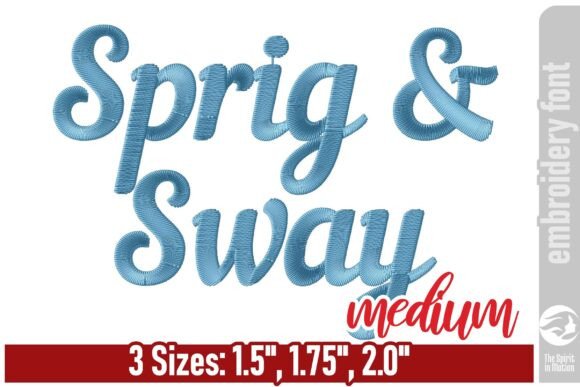
Script Number One: A Practical Evaluation of a Versatile Embroidery Font
In the realm of machine embroidery, typography is often treated as an afterthought. Designers frequently prioritize complex pictorial motifs, intricate borders, or heavy fill patterns, overlooking the potential of text to convey brand identity, personalization, and clarity. However, for professionals in custom apparel, promotional merchandise, and small business branding, the ability to integrate clean, legible, and stylish text into a design is not just a nice-to-have feature—it is a fundamental requirement. This is where Script Number One enters the conversation. It is not merely a font file; it is a functional asset designed to bridge the gap between digital typography and physical stitch execution.
This evaluation explores Script Number One from a practical standpoint, focusing on its technical specifications, usability across different platforms, and its suitability for various professional applications. The goal is to determine whether this specific embroidery font offers enough value to justify its inclusion in a designer’s library, particularly given its multi-format support and broad machine compatibility.
Understanding the Core Concept
At its core, Script Number One is a cursive-style typeface optimized for machine embroidery. Unlike standard vector fonts used in graphic design software, embroidery fonts must be converted into stitch data—coordinates that tell the needle exactly where to move, when to trim, and how much tension to apply. Many script fonts fail in this translation because they become too dense, lose their delicate lines, or create excessive jump stitches that result in thread breaks or fabric puckering.
Script Number One appears to have been engineered with these mechanical constraints in mind. The design retains the fluidity and elegance associated with hand-lettered scripts while ensuring that the underlying stitch structure remains robust enough for high-volume production. This balance is critical. A script that looks beautiful on a screen but falls apart on a hoop is of little use to a serious embroiderer. By prioritizing structural integrity alongside aesthetic appeal, Script Number One aims to solve one of the most common pain points in custom embroidery: the degradation of fine details during the digitizing process.
Technical Flexibility and Format Support
One of the most significant advantages of Script Number One is its availability in multiple embroidery file formats. In the industry, fragmentation is a major hurdle. Different manufacturers—such as Brother, Janome, Bernina, Husqvarna Viking, and Tajima—often use proprietary formats (e.g., .pes, .jef, .xxx, .dst). For freelancers and small business owners who serve diverse clients or work with varying equipment, being locked into a single format can limit workflow efficiency and market reach.
- Cross-Platform Compatibility: By offering multiple formats, Script Number One ensures that users are not restricted by the hardware they own. Whether you are working on a home-use machine or an industrial multi-head setup, the design should translate accurately without requiring complex conversion tools that might introduce errors.
- Reduced Conversion Risk: Converting embroidery files between formats can sometimes alter stitch density, direction, or color order. Having access to native files in the required format minimizes the risk of unintended artifacts, saving time on troubleshooting and re-digitizing.
- Future-Proofing: As technology evolves, having a library of designs in widely supported formats ensures longevity. You are less likely to encounter obsolescence issues if your primary machine brand changes or if you expand your service offerings to include clients with different systems.
This flexibility is particularly valuable for educators and trainers who may need to demonstrate techniques on various machines, or for entrepreneurs scaling their operations who might outsource production to facilities with different technical setups.
Design Characteristics and Visual Impact
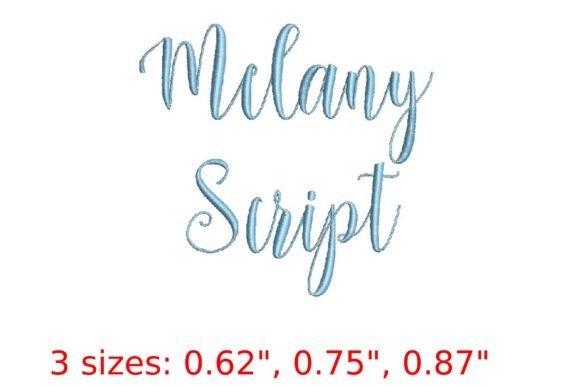
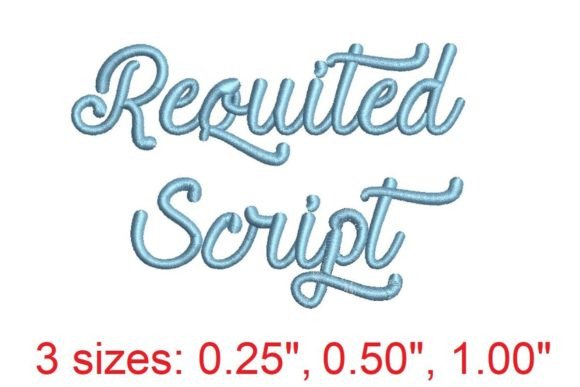
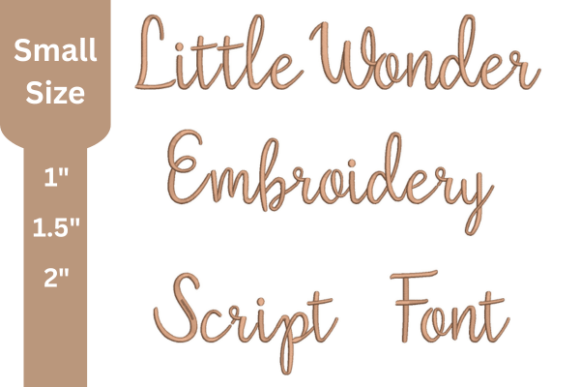
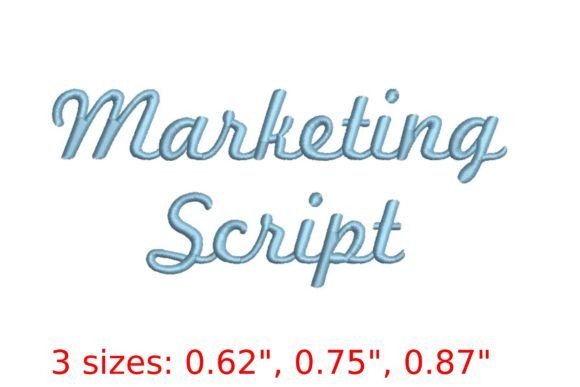
The visual identity of Script Number One leans towards a classic, readable script style. It avoids the extreme flourishes and exaggerated swashes found in novelty fonts, which often look chaotic when stitched at smaller sizes. Instead, it focuses on consistent stroke width and clear letter separation. This makes it highly effective for names, short phrases, logos, and labels where legibility is paramount.
Legibility at Scale: One of the challenges with script fonts in embroidery is maintaining readability when the design is scaled down. Large banners allow for expansive lettering, but a name tag or a coffee sleeve requires precision. Script Number One appears to maintain its character even at reduced sizes, thanks to thoughtful spacing and simplified curves. This is a crucial factor for products like tote bags, hats, and uniforms, where space is limited and quick recognition is essential.
Versatility in Application: The neutral yet elegant nature of the font allows it to blend seamlessly with a wide range of other design elements. It pairs well with geometric shapes, floral motifs, and minimalist icons. For marketers creating branded merchandise, this versatility means the font can adapt to different brand voices—from corporate and professional to creative and casual—without clashing with the overall visual theme.
Practical Performance and Reliability
When evaluating an embroidery design for real-world use, reliability is key. This includes how the design handles underlay stitches, how it manages thread trims, and how it reacts to different fabric types. While specific performance can vary based on the user’s digitizing settings, Script Number One is generally structured to perform well on stable fabrics such as cotton, polyester blends, and denim.
Stitch Efficiency: Efficient stitch counts matter, especially for commercial projects where production time equals cost. Designs with unnecessary complexity increase hoop time and wear on the machine. Script Number One seems optimized to minimize redundant movements, leading to faster stitching times without sacrificing quality. For high-volume producers, this efficiency translates directly into lower overheads and higher throughput.
Tension and Stability: Script fonts can sometimes struggle with tension issues, particularly if the needle penetrates the same area repeatedly. The digitizing behind Script Number One likely incorporates strategic underlay to stabilize the fabric before the top stitches are applied. This helps prevent distortion, ensuring that the final product looks crisp and professional rather than warped or loose.
Ideal Use Cases and Target Audience
Who benefits most from Script Number One? The answer lies in the diversity of modern embroidery applications.
- Small Business Owners and Entrepreneurs: For those launching clothing lines, gift shops, or corporate gifting services, customizable text is a revenue driver. Script Number One provides a ready-made solution for adding customer names, slogans, or dates to products quickly and professionally.
- Freelance Designers and Digitizers: Professionals who offer custom digitizing services can use this font as a reliable base for client requests. Its multi-format support reduces friction when collaborating with clients who provide specific file requirements.
- Educators and Hobbyists: For teachers running workshops or serious hobbyists experimenting with lettering, the ease of use and consistent results make Script Number One a low-risk, high-reward addition to their toolkit. It allows for creative exploration without the steep learning curve associated with more complex custom digitizing.
- Marketers and Event Planners: Personalized merchandise is a powerful marketing tool. From wedding favors to conference swag, the ability to produce high-quality, text-heavy designs efficiently supports campaigns that rely on personal connection and exclusivity.
Potential Limitations and Considerations
No resource is perfect, and understanding the limitations of Script Number One is part of making an informed decision. While it excels in readability and versatility, it may not be suitable for projects requiring highly decorative, vintage, or ultra-modern typographic styles. If a brand’s identity relies on bold, blocky sans-serifs or ornate gothic scripts, Script Number One would feel out of place.
Additionally, as with any embroidery font, the final result depends heavily on the operator’s skill. Factors such as hooping technique, stabilizer selection, and thread quality play a significant role. A poorly executed hoop can ruin even the best-designed file. Therefore, users should view Script Number One as a high-quality foundation that still requires competent execution to achieve optimal results.
There is also the consideration of saturation. Because it is a script font, using it for very long paragraphs of text is not recommended. Embroidery is not ideal for dense blocks of text due to fabric stiffness and readability issues. Script Number One is best utilized for short, impactful messages rather than extensive copy.
Conclusion: Is It Worth the Investment?
Script Number One represents a pragmatic approach to embroidery typography. It does not promise revolutionary artistic breakthroughs, but rather delivers consistent, reliable, and versatile performance. For professionals who need to integrate text into their designs without compromising on quality or workflow efficiency, it addresses several key needs: cross-platform compatibility, readability, and production speed.
Its strength lies in its balance. It is elegant enough for premium products yet sturdy enough for everyday items. It is flexible enough for various machine types yet precise enough for detailed work. For anyone in the embroidery field looking to streamline their text-based designs and reduce technical friction, Script Number One is a solid, functional asset worth considering. It fits neatly into a professional workflow, offering immediate utility and long-term value through its broad applicability and robust construction.