Unlocking the Potential of Paint King: A Comprehensive Guide to Dripping Graffiti Display Typography
In the ever-evolving landscape of visual communication, typography serves as the voice of design. It is not merely about legibility; it is about setting a tone, evoking an emotion, and capturing attention in a split second. Among the myriad of typefaces available to designers, Paint King stands out as a distinctive choice for those seeking to inject energy, rebellion, and artistic flair into their projects. This article explores the unique characteristics of this heavy-stroke, fun character font, analyzing its applications across various media, from digital social campaigns to physical merchandise.
The Anatomy of a Dripping Masterpiece
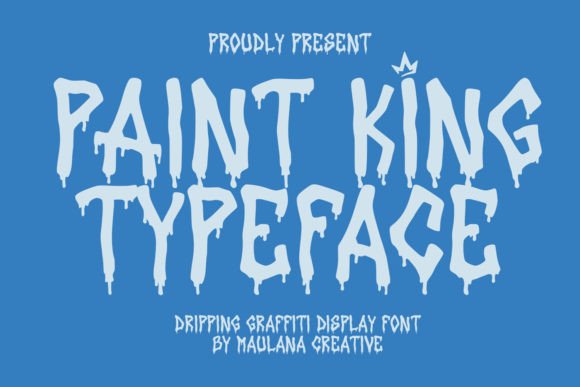
To understand why Paint King is a powerful tool, one must first appreciate its structural integrity. Unlike standard sans-serif or serif fonts that prioritize uniformity, Paint King embraces the chaotic beauty of street art. The defining feature of this typeface is its "dripping" effect. These drips are not random accidents but carefully crafted ligatures that suggest movement, wetness, and the raw energy of a spray can hitting a wall.
The font features a heavy stroke weight, which ensures that even at smaller sizes, the characters maintain a commanding presence. This thickness provides excellent contrast against busy backgrounds, making it ideal for headlines where readability must compete with visual noise. The "fun character" aspect mentioned in its description refers to the slight irregularities in the letterforms—some letters might lean, others might have exaggerated curves, and some connect via playful ligatures. This organic feel prevents the text from looking too sterile or corporate, instead giving it a hand-crafted, authentic vibe.
For designers, working with such a distinct font requires a strategic approach. Because Paint King is so visually dominant, it acts as both text and image simultaneously. It does not need accompanying graphics to convey its message; the letters themselves tell the story of urban creativity and bold expression.
Strategic Applications in Modern Design
The versatility of Paint King extends far beyond simple tagging. Its ability to bridge the gap between traditional graffiti aesthetics and modern graphic design makes it suitable for a wide array of professional contexts. Below, we examine specific use cases where this font shines.
Social Media Engagement
In the fast-scrolling world of social media, static images often get overlooked. However, text-based graphics featuring dynamic fonts can stop the scroll. Using Paint King for Instagram stories, Facebook covers, or YouTube thumbnails allows creators to add a layer of excitement to their content. The dripping effect draws the eye downward, guiding the viewer’s gaze through the caption or call-to-action. For brands targeting Gen Z or millennial audiences who appreciate streetwear culture and urban aesthetics, this font signals authenticity and trend-awareness.
Motion Graphics and Video Titles
When applied to movie titles, music videos, or documentary intros, Paint King brings a cinematic quality to the screen. The heavy strokes hold up well under motion blur, while the drips can be animated to simulate fresh paint running down a surface. Imagine a thriller movie title where the letters appear to be melting or dripping blood or neon light; Paint King provides the perfect base structure for such effects. Even for shorter texts like episode titles or segment headers, the font adds a premium, custom-made look that generic fonts cannot achieve.
Merchandise and Apparel Branding
Fashion and lifestyle brands constantly seek ways to differentiate their products. T-shirts, hoodies, caps, and tote bags benefit greatly from the bold outline of Paint King. When printed on fabric, the thick lines ensure durability and visibility. The font’s association with hip-hop culture, skateboarding, and street art resonates deeply with consumers who view clothing as a form of self-expression. Whether used for a small logo on a chest pocket or a large back-print, the font commands attention and conveys a sense of edgy sophistication.
Pairing Strategies for Balanced Composition
One of the most common questions designers face when using display fonts like Paint King is how to pair them effectively. Because Paint King is so expressive, it should rarely stand alone in a layout without support. The recommendation to use it as a secondary text font with script or serif typefaces is a crucial insight for achieving professional results.
Contrast is Key
The strength of Paint King lies in its roughness and weight. To balance this, designers should pair it with clean, minimalist typefaces. A classic serif font, such as Garamond or Baskerville, can provide a sophisticated counterpoint to the gritty nature of the graffiti style. This juxtaposition creates a hierarchy of information: the headline grabs attention with its energy, while the body text remains readable and elegant. Similarly, pairing Paint King with a delicate script font can create a "hard vs. soft" dynamic that is visually striking. Think of a luxury streetwear brand combining rugged graffiti elements with elegant cursive signatures—a combination that speaks to both rebellion and refinement.
White Space Management
Due to the complex shapes and dripping details of the letters, Paint King requires ample white space around it. Cluttering the area around these characters can make the text illegible and the design look messy. By allowing the font to breathe, designers emphasize its artistic qualities. This principle applies whether the text is set horizontally or vertically. Vertical layouts, in particular, can mimic the look of paint running down a wall, enhancing the thematic impact of the font.
Considerations for Professional Implementation
While Paint King offers numerous advantages, there are practical considerations that professionals must keep in mind to ensure successful implementation. Ignoring these factors can lead to designs that feel amateurish rather than artistic.
- Ligature Handling: The "bit of ligature" mentioned in the font's description means that certain letter combinations may behave differently. Designers should test key phrases to ensure that the connections between letters enhance the design rather than creating unintended shapes. In some cases, breaking words apart or adjusting kerning manually may be necessary to optimize the visual flow.
- Legibility at Scale: While Paint King excels at large sizes, its intricate details may become muddy if scaled down too far. For body copy or small print, it is advisable to switch to a simpler font. Reserve Paint King for headlines, logos, and short impactful statements where the visual impact outweighs the need for rapid reading.
- Color Psychology: The effectiveness of the dripping effect is heavily influenced by color choice. High-contrast colors like black on white, neon green on black, or bright orange on blue tend to work best. Muted or pastel colors might dull the aggressive energy of the font, whereas vibrant hues amplify the "wet paint" illusion.
- Contextual Appropriateness: Given its roots in graffiti culture, Paint King carries specific cultural connotations. It is perfect for events, brands, and messages related to youth culture, music, sports, and creative industries. However, it may be inappropriate for formal corporate reports, legal documents, or healthcare communications where stability and tradition are valued over rebellion and change.
The Future of Street-Inspired Typography
As digital interfaces continue to dominate our daily interactions, the demand for typography that feels human and tactile is growing. Users are increasingly fatigued by the homogeneity of web-safe fonts. They crave personality, texture, and narrative. Fonts like Paint King represent a shift towards "expressive utility"—typefaces that are functional but also carry a strong emotional payload.
This trend is evident in the rise of brutalist web design, where raw, unpolished aesthetics are celebrated. Paint King fits seamlessly into this paradigm, offering a way to break the grid and introduce chaos in a controlled manner. Furthermore, as augmented reality (AR) and virtual environments expand, 3D text effects will become more prevalent. The inherent depth suggested by the drips in Paint King makes it a natural candidate for 3D modeling and AR overlays, where text appears to interact with the physical environment.
Conclusion
Ultimately, Paint King is more than just a font; it is a design statement. It bridges the gap between the underground art scene and mainstream commercial design, offering a versatile solution for creators who want to make a bold impression. By understanding its heavy stroke dynamics, leveraging its dripping ligatures, and pairing it strategically with complementary typefaces, designers can unlock new levels of creativity in their work. Whether you are crafting a movie title, designing a social media campaign, or branding a new apparel line, Paint King provides the visual punch needed to cut through the noise and engage your audience on a deeper, more visceral level.
For professionals looking to stay ahead of typographic trends, incorporating fonts with such distinct character sets is not just a stylistic choice—it is a strategic advantage. It signals confidence, creativity, and a willingness to embrace the unconventional. As the design world continues to evolve, the influence of street art aesthetics will likely grow, making tools like Paint King essential assets in any designer’s toolkit.