Glasser: A Modern Sans Display Font for High-Impact Design
In the crowded landscape of digital typography, finding a typeface that commands attention without sacrificing readability is a constant challenge. Designers and content creators are often forced to choose between heavy, aggressive display fonts and softer, more traditional serifs. Glasser emerges as a compelling middle ground, offering a modern wide sans display aesthetic that balances bold presence with playful versatility. It is not merely another generic sans-serif; it is a carefully constructed tool designed for impact, characterized by its broad strokes, unique character set, and strategic use of ligatures.
This evaluation explores the practical applications, structural strengths, and potential limitations of Glasser. By analyzing its design philosophy and real-world utility, we can determine how this font fits into the workflows of professionals ranging from graphic designers and marketers to publishers and educators.
Design Characteristics and Visual Identity
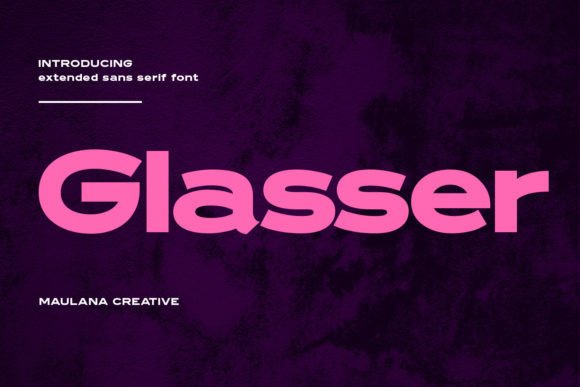
The most immediate observation regarding Glasser is its width. As a wide sans display font, it occupies significant horizontal space on the page or screen. This expansion is not arbitrary; it serves to create a sense of stability and authority. The bold strokes provide a visual weight that anchors headlines and titles, ensuring they remain legible even at smaller sizes or when viewed on low-resolution displays. Unlike narrow grotesques that can feel cramped, Glasser breathes, giving each letterform room to establish its own identity while contributing to a cohesive word shape.
What distinguishes Glasser from other wide sans options is its personality. The font possesses a "fun character," achieved through subtle variations in stroke weight and terminal shapes. It avoids the sterile, corporate neutrality often associated with geometric sans-serifs. Instead, it introduces a touch of whimsy that makes it suitable for brands aiming to appear approachable yet professional. This duality allows it to function effectively in contexts where warmth and clarity are equally important.
A critical component of Glasser’s appeal lies in its typographic features, specifically its ligatures and alternates. These are not mere decorative afterthoughts but integral parts of the font’s architecture. Ligatures connect certain letter pairs (such as 'fi' or 'fl') to prevent collision and improve flow, while alternate glyphs offer designers choices to enhance rhythm and avoid repetition in longer texts. For instance, the availability of different 'a' or 'g' forms allows for customizing the look of a headline to match specific brand guidelines or artistic visions. This level of control is essential for high-end logo design and editorial layouts.
Practical Applications Across Media
Understanding where Glasser excels requires looking at its performance across various media formats. Its versatility is one of its strongest assets, making it a valuable addition to any designer’s toolkit.
- Logo Design: The bold, wide structure of Glasser provides excellent scalability. Logos require typefaces that are recognizable at both favicon size and billboard scale. Glasser’s distinct letterforms ensure high辨识度 (recognizability) even when simplified. The fun character adds memorability, helping brands stand out in competitive markets.
- Social Media Graphics: In the fast-scrolling environment of social media, text must grab attention instantly. Glasser’s high contrast and wide stance make it ideal for Instagram posts, Facebook ads, and YouTube thumbnails. It ensures that key messages are read quickly, reducing bounce rates and increasing engagement.
- Movie and Book Titles: For creative industries, first impressions matter. Glasser’s dramatic presence makes it a strong candidate for title treatments in films, theater productions, and book covers. It conveys energy and modernity, fitting well with genres ranging from contemporary fiction to tech-focused non-fiction.
- Short and Long Text: While primarily a display font, Glasser’s clean lines allow it to handle short body text effectively. However, its true strength lies in headings, subheadings, and pull quotes. Using it for long-form paragraphs may cause eye fatigue due to its width, so it is best reserved for impactful statements rather than dense informational text.
Strategic Pairing with Script and Serif Fonts
No font exists in isolation. The effectiveness of Glasser is significantly amplified when paired with complementary typefaces. The recommendation to use Glasser as a secondary text font alongside script or serif fonts is a sound typographic strategy. This combination leverages the strengths of each family to create visual hierarchy and interest.
When paired with a script font, Glasser provides a stable, grounded counterpoint to the fluid, organic curves of the script. This contrast prevents the design from becoming too chaotic or difficult to read. For example, using Glasser for the main heading and a delicate script for a tagline or signature creates a sophisticated balance between professionalism and creativity. This pairing is particularly effective for lifestyle brands, wedding invitations, and boutique product packaging.
Pairing Glasser with a serif font offers a different dynamic. Serifs bring tradition, elegance, and readability to the mix. When used together, Glasser’s modern width contrasts with the classic refinement of a serif, creating a contemporary yet timeless aesthetic. This combination works well for editorial designs, magazine layouts, and academic publications that want to appear modern without losing gravitas. The wide sans draws the eye, while the serif guides the reader through the content smoothly.
Quality, Usability, and Reliability
From a technical standpoint, Glasser demonstrates high quality in its construction. The vector paths are clean, and the kerning pairs are generally well-adjusted, minimizing the need for manual tweaking in most design software. This reliability is crucial for professionals who work under tight deadlines. The inclusion of multiple weights and styles, if available, further enhances its usability, allowing for consistent branding across different mediums.
However, users should be mindful of the font’s width in constrained spaces. Because Glasser expands horizontally, it can disrupt layout grids if not planned carefully. Designers must allocate sufficient whitespace to accommodate its breadth, ensuring that margins and padding are adjusted accordingly. Neglecting this aspect can lead to cluttered designs that undermine the font’s intended clarity.
Another consideration is the consistency of the alternates. While these features add value, they require intentional selection. Automatic substitution may not always yield the desired result, so designers must manually review text to ensure the alternates align with the overall tone. This requirement adds a layer of workflow complexity but ultimately rewards the user with a more polished and bespoke appearance.
Who Benefits Most from Glasser?
Glasser is particularly well-suited for a diverse range of professionals:
- Graphic Designers and Brand Strategists: Those looking to create memorable visual identities will appreciate the font’s unique character and flexibility. It helps brands differentiate themselves in saturated markets.
- Marketers and Content Creators: Social media managers and digital marketers benefit from Glasser’s ability to capture attention quickly. Its readability on small screens makes it an efficient tool for driving clicks and engagement.
- Publishers and Authors: For those designing book covers or promotional materials, Glasser offers a modern alternative to traditional serif titles. It signals relevance and contemporary thinking to potential readers.
- Educators and Presenters: In educational settings, clear and engaging visuals aid learning. Glasser’s bold presence makes slide titles and key concepts stand out, helping to maintain audience focus during presentations.
Limitations and Considerations
While Glasser is a powerful tool, it is not a universal solution. Its wide format limits its suitability for dense text blocks or narrow columns. Attempting to force it into such contexts can result in poor readability and awkward line breaks. Additionally, the "fun" character may not align with highly formal or conservative industries, such as law or finance, where understated elegance is preferred. In these cases, a more neutral sans-serif or a classic serif would be a more appropriate choice.
Furthermore, reliance on ligatures and alternates means that projects exported to formats that do not support OpenType features may lose some of their visual richness. Designers must ensure that final outputs are compatible with the font’s advanced features or flatten the text where necessary.
Final Assessment
Glasser represents a thoughtful evolution in the sans display category. By combining bold, wide strokes with playful details and functional ligatures, it offers a versatile solution for modern design challenges. Its ability to pair effectively with scripts and serifs expands its utility, making it a valuable asset for creating balanced, hierarchical compositions.
For professionals seeking a font that delivers impact without compromising on style, Glasser is a strong contender. It excels in logo design, social media graphics, and title treatments, provided that its width is respected in the layout. While it may not be suitable for all contexts, its specific strengths make it an indispensable tool for those aiming to create visually striking and memorable work. Ultimately, Glasser is not just a typeface; it is a design decision that communicates confidence, modernity, and attention to detail.